Powering American Progress
For more than a century
The United States has been defined by a spirit of progress, pushing further, building more, and creating what’s next. For more than 100 years, Shell has been part of how America moves and grows, helping power industries, connecting communities, and enabling everyday life.
Momentum doesn’t happen alone. Breakthroughs build on what came before, shaped by people, ideas, and the energy that connects them.
Watch how those moments, and the energy behind them, come together.
Read the transcript
Read the transcript
Title: Energy for progress I Powering America's energy security together
Duration: 10:33 minutes
Description:
Blending archival footage, historic photographs, interviews and contemporary cinematography, the program chronicles America's enduring spirit of innovation, following the nation's journey from the Industrial Revolution and the rise of the automobile to aviation, space exploration, deep-water engineering and liquefied natural gas, while illustrating how Shell has contributed to more than a century of energy, technological progress and the pursuit of future innovation.
Energy for progress I Powering America's energy security together [Background music plays]
The Sound of Shell weaves through the video in a range of musical styles, shaping the mood of each segment: atmospheric passages, triumphant trumpet, oscillating chords and delicate key trills as history unfolds, fast-paced rock driving high-energy sequences, acoustic guitar underscoring scenes of American life, and rich orchestral arrangements that swell through dramatic moments and carry the story to its conclusion.
Voiceover
The United States of America is a country founded on a pioneering spirit, an ethos to strive harder, to push further and to achieve the remarkable.
Video footage
The video opens with a sunrise viewed from space. The Sun's edge emerges above Earth's curved horizon, casting a thin blue glow along the atmosphere while the planet below remains in darkness. As the Sun rises higher, brilliant white-gold light flares outward, illuminating the upper atmosphere.
Earth's surface gradually comes into view, with faint city lights still visible across the North American continent on the night side as daylight spreads over the planet, revealing its textures and colors.
Split-screen footage
The frame divides into three panels separated by black borders: one large panel at frame left and two stacked panels at frame right, displaying a succession of scenes depicting American life, landmarks and history.
In the left panel, the view of Earth from space transitions to an aerial night-time cityscape, where a grid of streets forms a glowing lattice of yellow-white lights stretching across the landscape. This gives way to tracking footage of tall, slender palm trees silhouetted against a bright, hazy sky, evoking Southern California.
In the upper-right panel, a wagon train led by a lone horseman crosses a wide grassy plain beneath a pale sky. A panning shot then reveals Mount Rushmore beneath dramatic, cloud-streaked skies, followed by an aerial view of the Hollywood Sign overlooking the city below.
In the lower-right panel, a historical scene depicts the signing of the Declaration of Independence. This is followed by an aerial view of a packed Rose Bowl stadium as players run onto the brightly lit field, then archival footage of a smiling woman wearing a plaid shirt and yellow rosette applauding among fellow spectators.
John F. Kennedy
But why, some say, the moon? Why fly the Atlantic? We choose to go to the moon in this decade and do the other things, not because they are easy, but because they are hard.
Split-screen footage
The three-panel montage continues, combining imagery of the Apollo and Artemis programs with scenes of American life.
In the left panel, the palm trees give way to a close view of the Moon's cratered surface, its rugged terrain marked by deep shadowed depressions, followed by archival footage of a rocket launch.
In the upper-right panel, a city skyline glows at dusk, its illuminated buildings reflected in calm water. Medium footage then shows President John F. Kennedy addressing a large outdoor crowd from a podium surrounded by microphones.
In the lower-right panel, children run towards a parked vintage car as their parents follow carrying picnic baskets and folding chairs before everyone climbs aboard. This is followed by archival footage of a tall white USA rocket standing on its launch pad beneath a clear sky, then a sweeping overhead shot of an absorbed crowd surrounded by rows of classic cars and vintage truck campers.
Split-screen footage
The frame divides into two panels separated by a black border. In the right panel, archival footage shows the American flag planted upright on the Moon's grey surface, casting a sharp shadow across the ground. In the left panel, a dimly lit close-up captures a child seated among a crowd, gazing ahead in awe before the scene cuts to raised hands making V-signs.
Ronald Reagan
All of this represents the application of knowledge to human needs on a massive scale. You are the builders, the dreamers, the heroes.
Split-screen footage
The frame divides into six panels, appearing progressively and separated by black borders, celebrating American culture and landmark moments in music, film, sport and technological achievement.
In the upper-right panel, President Ronald Reagan speaks from a podium before a navy backdrop with a United States flag prominently displayed behind him.
In the upper-middle panel, a sweeping shot shows a climber standing on a rocky mountain summit beneath drifting clouds. This is followed by a graduate in a blue gown and mortarboard shaking hands during an outdoor ceremony before walking alongside an older man in a suit, with a vintage blue car visible behind them.
In the upper-left panel, a low-angle shot captures young people concentrating as they solve Rubik's Cubes. Archival black-and-white footage then shows workers assembling automobiles on a Ford production line.
In the lower-left panel, a packed concert crowd fills a brightly illuminated stadium beneath an intricate steel roof structure. A sequence of rocket launch footage follows, showing engines igniting, flames and smoke engulfing the launch pad, ascent through the clouds, and separation of the solid rocket boosters.
In the lower-middle panel, archival black-and-white footage shows a man wearing protective headgear shielding his eyes as he looks skyward. The scene then cuts to a baseball catcher crouched behind home plate in full protective gear.
In the lower-right panel, a dramatic low-angle shot captures a female athlete wearing jersey number 22 celebrating victory with her arms raised as she drapes the United States flag across her shoulders.
Elvis Presley
Every dream that I ever dreamed has come true a hundred times. Split-screen footage
The frame divides into five panels. At frame right, Elvis Presley is shown in profile speaking at a
podium, while the four panels at frame left continue displaying the previously described montage. Gradually, the footage of Elvis expands to fill the screen before fading to black.
Interview with Dr. Alicia Williams
[Title]
Shell Chemistry & Innovation GM
Dr. Alicia Williams Our history...
Split-screen footage
The frame divides into three panels. In the upper-left panel, a close view reveals the handwritten opening lines of the Declaration of Independence. The lower-left panel focuses on the typed date, "July 4, 1776". At frame right, black-and-white footage shows an early city street where automobiles, horse-drawn carriages and pedestrians share tram-lined roads beneath a prominent clock tower.
Dr. Alicia Williams
Is a story of constant revolutions of advancement ... [Text displays]
Dr. Alicia Williams - Shell Chemistry & Innovation GM
Video footage
Close-up and medium footage captures Dr. Alicia Williams speaking to the off-screen interviewer, wearing a bright pink jacket and seated in front of shelves filled with books and plants. A yellow-accented white lower-third briefly appears at the lower left, displaying her name and title.
Dr. Alicia Williams
The Industrial Revolution... Split-screen footage
The frame divides into two panels separated by a black border. At left, black-and-white close-ups show
large industrial gears rotating in synchronized motion. At right, an aerial color view reveals a vast industrial complex comprising multiple buildings, storage tanks, smoking chimneys and an extensive network of interconnected pipelines.
Dr. Alicia Williams
The social and cultural revolutions... Split-screen footage
A woman stands on a city street holding a hand-painted sign reading "Honk for Peace", with passing
traffic and surrounding buildings behind her. The frame then divides, with the central image continuing while three triangular panels, separated by black borders, display outdoor gatherings of hippies, many raising their hands in V-signs.
Martin Luther King Jr.
I have a dream today!
Video footage
Archival black-and-white footage fills the frame as Martin Luther King Jr. delivers his "I Have a Dream" speech from a podium crowded with microphones.
Dr. Alicia Williams
And the technological and information revolutions. Video footage
A close-up shows an early computer tape drive with two large magnetic reels spinning beside a panel
of colored buttons. A wide shot reveals a man seated at a vintage data terminal while another operates one of several towering mainframe computers filling the room. The scene then shifts to a modern workstation where a man wearing headphones works at a desk surrounded by multiple computer monitors.
Dr. Alicia Williams
But making all that possible and powering it all is the energy revolution. Video and split-screen footage
Archival black-and-white footage shows a welder leaning over metal as bright sparks spray from the
welding torch. The scene cuts to a long metal pipeline stretching across open grassland, with construction vehicles and equipment visible in the distance. Further archival footage captures the Megara, a large vessel travelling across open water while another ship sits on the horizon. The frame then divides into two: at left, aerial footage follows a tanker cutting through the ocean, while at right, a bird's-eye view shows an LNG carrier with rounded white storage tanks sailing beneath a cloudy sky.
Finally, filling the frame, a low-angle view captures oil pump jacks, or nodding donkeys, silhouetted against a vivid sunset as their arms move in a steady up-and-down rhythm.
Chapter 1 - Energy for Progress
Voiceover
The innovation that defines America requires energy sources that have been in constant evolution throughout the generations.
Video footage
A close-up captures a drill component spinning rapidly, its polished metal surface blurred by motion. Archival black-and-white footage then shows a tall drilling derrick standing among trees as a powerful column of steam erupts from the ground, followed by a low-angle view of a worker hoisting heavy rigging equipment. A series of aerial shots showcases energy infrastructure: a vast refinery spread across a mountain valley with towers, storage tanks and pipework; a modern waterfront refinery packed with chimneys, cylindrical tanks and intricate metallic structures; and an offshore platform rising above the ocean, equipped with cranes, drilling equipment and a helipad marked with a large "H".
Voiceover - Archive
Man's dreams are beginning to reach out beyond the horizon. Video footage
Archival black-and-white footage from a 1930s film about James Doolittle shows a single-propeller aircraft taking off before flying over a rugged mountain landscape of ridges and valleys.
Voiceover
Shell has been one of the pioneers of energy and innovation in America since 1912. Video footage
A wide archival view follows, revealing an expansive oil field crowded with tall drilling derricks.
Additional footage shows workers maneuvering large metal pipes and heavy drilling equipment on an industriaI rig floor.
[Graphic]
A vintage illustrated poster depicts airplanes flying above a large red canister labelled "Shell Motor Spirit" beneath the heading The Spirit of the Coming Age, while below, steam trains and horse-drawn carriages appear under the contrasting heading The Passing Age.
Interview with Dr. Alicia Williams continued
Dr. Alicia Williams
Progress isn't just about bold ideas. It's about building the systems that allow those ideas to reach everyone.
Video footage
Medium footage shows Dr Alicia Williams speaking to the off-camera interviewer in the previously described setting. The scene cuts to a wide view of a Shell-branded fuel tanker driving beneath a steel truss within an industrial facility, followed by a close-up of the truck displaying the Shell name and iconic Pecten logo. Another wide shot shows a Shell fuel truck parked beside a large commercial aircraft as a worker on a raised platform prepares to connect the fueling equipment beneath the wing. A close-up captures the thick fuel hose being secured to the aircraft's under-wing fueling port before a dramatic low-angle shot shows the aircraft soaring overhead.
Interview with Brian C. Black
[Title]
History Professor and Author
Brian C. Black
Edwin Drake struck the first well for oil in Pennsylvania in 1859, and that boom made things possible that would change American life.
[Text displays]
Brian C. Black - History Professor and Author
Video footage
A softly focused profile close-up shows Brian C. Black speaking to the off-camera interviewer while seated indoors wearing a light-colored button-up shirt. A yellow-accented white lower-third briefly identifies him by name and title. Archival black-and-white portrait photographs of Edwin Drake follow, showing the bearded oil pioneer dressed in a suit and waistcoat. Another archival still depicts a small nineteenth-century wooden oil derrick standing in a rural clearing with several people gathered nearby. Finally, a slow panning shot reveals a dense landscape of early metal oil derricks stretching across the horizon.
Voiceover
Today, Shell is the largest producing leaseholder in the Gulf of America.
Video and split-screen footage
A sequence of offshore platforms follows. A sweeping arc shot circles a modern platform standing on a yellow tension-leg platform above the ocean, with cranes, machinery and a supply vessel alongside.
Another platform is silhouetted against bright sunlight shimmering across the sea, its cranes and upper decks outlined by the glare. The frame then divides into three, showing aerial views of deep-water platforms with yellow substructures, while the left-hand panel also includes a supply vessel moored alongside. The sequence concludes with an offshore platform silhouetted against a dramatic sunset, its cranes and deck structures framed by glowing clouds and the low Sun.
Interview with Colette Hirstius
[Title]
President, Shell USA
Colette Hirstius
Shell's been successfully operating in the United States of America for over 100 years, and we have been powering the American dream.
Video footage
Archival black-and-white footage shows a uniformed worker returning a large fueling hose to its storage point after refueling a Shell-branded tanker truck. The truck then drives away from the industrial facility before the scene cuts to a Shell Pecten flag flying against the sky.
[Text displays]
Colette Hirstius - President, Shell USA Video footage
A close-up introduces Colette Hirstius speaking to the off-camera interviewer, seated indoors in a
modern office with large windows, soft neutral decor and wearing a dark blue top. A yellow-accented white lower-third briefly appears at the lower left, displaying her name and title.
Chapter 2 - Mass Production
Voiceover
In 1900, the average American traveled 340 miles a year, less than a mile a day. Today, that has risen to over 10,000 miles, transforming the way people live.
Video footage
A montage of archival black-and-white street scenes follows: early motorcars crowd tram-lined streets as pedestrians weave between them; people cross broad tram tracks while vintage cars pass multi-story buildings beneath a distant clock tower; police officers cycle towards the camera as horse-drawn carriages and pedestrians share the road behind them; and busy city streets bustle with early automobiles, streetcars and pedestrians among rows of commercial buildings and shop signs.
Video footage with animated sequence
The sequence shifts to a modern montage layered with colorful light streaks and lens flares. An aerial night view shows streams of traffic flowing along a highway, their headlights and taillights forming ribbons of yellow, red and blue light. A succession of aircraft lands on a runway illuminated by colored approach lights and distant city lights. Abstract heat map-style graphics then bloom across the screen, appearing to radiate from moving vehicles and an aircraft crossing above.
Interview with Brian C. Black continued
Brian C. Black
To make automobiles affordable was kind of the first necessary point. Henry Ford was the revolutionary who made that democratization of the automobile possible. Through analyzing the process of production, we could actually make something more attainable to the American consumer.
Video footage
A wider shot shows Brian C. Black speaking to the off-camera interviewer while seated in a bright, contemporary lounge with patterned chairs, tables and large windows softly visible behind him. lntercut archival black-and-white footage depicts automobile production inside a Ford factory, where workers assemble car bodies, operate heavy machinery and fit large components to chassis frames.
The sequence concludes with rows of completed vehicles being inspected and driven from the factory, illustrating the journey from manual assembly to finished automobile.
Brian C. Black
That became the American model for lowering the cost of something that everyone wanted. Video footage
The shot returns to Brian C. Black speaking to the off-camera interviewer.
Split-screen footage
The frame divides into six panels, appearing successively and separated by black borders. The montage contrasts early industrial production with modern manufacturing. In the two panels at frame left, archival black-and-white footage shows workers operating heavy machinery and assembling components along early factory production lines. The two center panels shift to a contemporary fast-food kitchen, where hands place slices of cheese onto burger patties while customers wait inside a brightly lit restaurant. In the two panels at frame right, close-up footage captures sewing machines stitching fabric during modern textile production.
Brian C. Black
Automobiles would need to have infrastructure to be supported. And so that became a system of pipelines that then take shape to be everywhere in the United States now, an energy supply that is essential to the American standard of living.
Video footage
The shot returns to Brian C. Black speaking to the off-camera interviewer. An archival black-and-white sequence follows, opening with busy city streets crowded with early automobiles before shifting to workers installing, welding and inspecting large pipelines using heavy machinery. Long stretches of completed pipeline extend across open countryside, followed by views of a sprawling industrial refinery complex. The sequence concludes with a man refueling a vintage automobile at a service station.
Voiceover
Shell has sold gasoline to Americans since 1913, and the first iconic clamshell gas stations were built in 1930.
Video footage
Archival black-and-white close-up footage shows a smiling service station attendant wearing a Shell cap. The scene transitions to faded color footage beginning with a close view of a fuel nozzle filling a vehicle's tank, before widening to reveal vintage Shell pumps and classic cars as the customer returns the nozzle to the pump. The sequence concludes with a bright yellow Shell clamshell service station, flanked by two vintage fuel pumps, showcasing the distinctive architecture that once defined Shell's roadside presence.
Interview with Dr. Alicia Williams continued
Dr. Alicia Williams
When someone pulls into one of the 12,000 Shell gas stations across the country, they are tapping into a vast invisible network that's been built over decades.
Video footage
The sequence opens with a close view of a vintage yellow Shell tanker truck passing through the frame before revealing a forecourt lined with period fuel pumps outside a building displaying historic signage. It continues with a retro scene of a customer refueling a red sports car at a pump labelled "Super Shell", before transitioning to a modern service station where several vehicles fill up beneath Shell's familiar wide canopy.
The scene then returns to Dr Alicia Williams speaking to the off-camera interviewer in the previously described setting. Another vintage color sequence follows, beginning with a train hauling Shell-branded tanker wagons along a railway line, moving to a waterfront industrial facility where large cylindrical storage tanks rise behind a passing vessel, and concluding with a yellow Shell tanker truck driving rapidly across a paved depot.
Voiceover
In 1927, Shell built its first US pipeline. Split-screen footage
The frame divides into three panels separated by black borders. The upper-left panel presents archival
black-and-white footage documenting construction of Shell's first United States pipeline, showing workers operating heavy machinery, positioning and welding large pipe sections, and assembling the pipeline across changing terrain. Meanwhile, the right-hand and lower panels consistently display modern aerial views of the completed pipeline winding through green countryside and across a broad valley.
Interview with Brian C. Black continued
Brian C. Black
This is what I call the hidden nozzle behind American consumption, because we don't think about where the energy's coming from, we just know it will be there.
Video footage
The split-screen sequence continues before a low-angle shot fills the frame, showing two workers wearing safety helmets and high-visibility clothing standing on a metal platform as they inspect a network of large white industrial pipelines. Valves, fittings and extensive pipework stretch across the facility behind them. The scene returns to Brian C. Black speaking to the off-camera interviewer before fading to black.
Chapter 3 -The Need for Speed
Voiceover
From the era Americans first turned the key of an engine, they wanted to push the boundaries, they wanted to go faster.
Video footage
A high-energy sequence follows lndyCars racing at speed. Some shots use deliberate motion blur to emphasize their pace, while others slow the action to highlight a Shell-branded car running through a corner. The montage continues with tightly packed fields of cars sweeping around the circuit, Shell-branded grandstands filled with spectators, trackside signage for the Indianapolis Motor Speedway, and the checkered flag signaling the finish. It concludes with celebration as a driver in a Shell racing suit sprints towards the safety wall, squeezes through an opening and embraces a team member while photographers capture the moment.
An archival black-and-white sequence follows, showing an early racing driver leaning forward behind a handlebar-style steering system before vintage race cars sweep around a bend viewed from behind.
Spectators watch from packed grandstands, and the sequence concludes with a high-angle close-up of a racing car speeding past, its wheels blurred by motion.
Interview with Brian C. Black continued
Brian C. Black
We got passionate. We wanted to hit the open road, and we wanted to hit it as fast as we could. Some of that is just human. The human body enjoyed the rush.
Video footage
The archival racing footage continues before the frame returns to Brian C. Black speaking to the off-camera interviewer. More black-and-white racing footage follows, showing vintage cars sweeping around dirt circuits, spectators gathered behind simple barriers, and close views of drivers gripping oversized steering wheels. Additional archival shots capture racing cars speeding past grandstands, motion blur accentuating their speed, before the sequence transitions into full color as modern open-wheel racing cars negotiate a steeply banked circuit with Shell branding visible trackside.
Voiceover
The need for speed soon played out in the skies, too Video footage
Another archival black-and-white sequence begins with an aircraft taking off across an airfield, partially framed by a larger aircraft in the foreground, before another plane passes overhead against the sky.
The sequence then cuts to a large outdoor crowd gathered closely together, watching the aerial display.
Interviewer - Archive
Congratulations Jim, looks like you set a new record.
James Doolittle Thank you, James.
Video footage
The historical footage continues as James Doolittle climbs from his Gee Bee NR2100 aircraft and is congratulated by an interviewer.
Brian C. Black
When we think about pushing those speed boundaries, James Doolittle becomes a symbol. [Text displays]
New Air Speed King! Here is Doolittle on record flight of 296 miles an hour, Caputo - camera, Saunders
- sound, Pathe News
Video footage
A title card announcing his new air speed record briefly fills the frame before returning to a close-up of Doolittle standing proudly beside the aircraft and concluding with a still photograph of him smiling from the cockpit with his hands on the controls.
Brian C. Black
So, Doolittle, working as the head of Shell's Aviation division, using the 100 octane fuel to push the boundaries of aviation, is given a lot of credit for victory in the air during World War Two.
Video footage
Medium footage shows Brian C. Black speaking to the off-camera interviewer. Another historical sequence follows, beginning with James Doolittle and a woman looking from the cockpit windows of a Shell-branded aircraft before moving inside a laboratory where a technician handles flasks containing test liquids. The montage then shifts to an aircraft taking off from a runway before concluding with formation flights of Second World War military aircraft and a close-up of a bomber in flight.
Voiceover
Back at home, Shell's technical support helped The Spirit of America break the world land speed record, reaching over 600 miles per hour at Bonneville Salt Flats.
Video footage
This historical sequence, set on the wide, flat expanse of the Bonneville Salt Flats, moves from crew members gathered around the Shell-branded Spirit of America jet-powered vehicle to a close-up of technical team members in discussion. It then shows the Spirit of America accelerating across the salt flats as a small aircraft flies overhead, before streaking across the desert surface.
Voiceover - Archive
Craig Breedlove had driven faster than any man had driven before. Video footage
In close-up, Craig Breedlove is seen shaking hands with one of the spectators.
Voiceover
And from a racing legacy that began in the 1980s, to partnerships that continue to grow today, Shell's motorsports relationships span decades of performance and innovation.
Video footage
An archival sequence begins with lndyCar racing, showing a car speeding past a packed grandstand, cheering spectators behind the barriers, and a yellow Pennzoil-branded car pulling into the pits, where the driver is surrounded by congratulating team members before receiving the victory wreath.
Additional scenes feature Pennzoil- and Penske-branded cars both on track and in the pits, with yellow-uniformed team members celebrating victories. The sequence then shifts to more modern footage of Shell-branded racing cars on track, including cockpit-level views of a driver at speed, the steering wheel displaying a complex array of controls, and a driver pumping his fist in celebration after victory.
Interview with Dr. Alicia Williams continued
Dr. Alicia Williams
The racetrack is really one perfect example of what a living laboratory can be like out in everyday life. We're testing the performance, we're testing the efficiency, we're making sure that the structures in vehicles can withstand. You know, it's a chemist's dream.
Video footage
Close-up profile footage shows Dr Alicia Williams speaking to the off-screen interviewer. The sequence then moves from an exterior view of the Shell Trackside Laboratory entrance to close-ups of gloved hands handling small vials of colored liquids and testing containers, followed by a pipette dispensing fluid beside branded laboratory equipment. It then shifts to a control panel where a technician presses a green start button, ending with a view inside illuminated analytical machinery. The sequence continues with an overhead view of a red, yellow, and white Shell-branded lndyCar on pit lane, its driver strapped into the cockpit while a crew member works alongside. It then follows the same car leading a pack of lndyCars down a straight before ending at Indianapolis Motor Speedway, where the driver and team, dressed in matching red and yellow uniforms, celebrate in victory lane.
Chapter 4 - Post-War Boom
Voiceover
After the Second World War, the economy boomed. It changed the way people worked. Video footage
The sequence moves from a view along an open highway beneath a clear dusk sky to overhead power
lines, then to a passing orange-painted building with red roof and gabled windows filmed from a moving vehicle. It continues to a large car park outside a busy public building where the American flag flies, before cutting to a vintage vehicle being hoisted inside a garage, ending with a green vintage car parked beside a newly framed house under construction.
Interview with Brian C. Black continued
Brian C. Black
What became really fascinating was the passion for the open road. So the automobile was essential for everyday life, but it also became a vehicle for adventure.
Video footage
The sequence moves from a front view of a classic car leaving a filling station to a light-colored vintage car pulling onto the road and driving past roadside trees and utility poles in warm late-afternoon light. It concludes with a long country highway stretching towards the horizon through open fields and scattered houses. Medium close-up footage then shows Brian C. Black speaking to the off-camera interviewer.
Voiceover - Archive
A new individual transportation means new freedom of movement to all of us.
Brian C. Black
And every family gets a vision of what it meant to go on vacation and to not be encumbered by everyday life.
Video footage
The sequence moves from a crowded mid-century car park filled with classic vehicles to children running towards a parked station wagon while their parents load a picnic basket and folding chairs into the vehicle. It then shifts to views from inside a moving car, with trees and another vehicle blurring past, followed by a windscreen-framed approach to a bridge, a sunset drive along an open highway, and finally a snowy landscape viewed through a car window.
Brian C. Black
The 1950s brought the era of car culture, from diners to drive-in theaters, to camping in national parks. Video footage
The sequence moves from a busy mid-century city street filled with vintage cars to the bold sign of the
Drogstore Cafe, followed by a black-and-white sign advertising a drive-in theatre. It then shifts to a quiet rural landscape seen through passing car windows, where horses graze in a field, before ending with a family camping beside a car and tent, with a table full of snacks and a child playing in a portable pool.
Voiceover - Archive
All its scenic grandeur along all its far-flung highways within the reach of all.
Video footage
The sequence moves from a sweeping view of rugged, snow-patched mountains and dense forests to a long, straight causeway stretching across open water beneath a clear sky, before ending on a sunlit road lined with tall palm trees.
Chapter 5 - Frontiers
Voiceover
An ambitious America faced epic new technological frontiers. Shell had a role in the Apollo 8 mission, developing technology that improved control of the rocket motors.
Video footage
The sequence moves from a wide view of New York City's skyline to the Statue of Liberty surrounded by water, then to a busy mid-century street scene. It shifts to footage of the Moon before showing a towering rocket on its launch pad, followed by a closer view of its support structures, and ends with the rocket lifting off as flames and smoke billow from its base.
Interview with Dr. Alicia Williams continued
Dr. Alicia Williams
Missions like Apollo are a master class in engineering and chemistry. Shell developed a catalyst so the spacecraft could maneuver precisely in space.
Video footage
The sequence moves from interior views of a red-lit docking adapter as a spacecraft begins to pull away to an exterior perspective showing the separation taking place above Earth, with the planet's curved horizon visible below. It concludes with the detached module drifting farther from the rocket stage against the backdrop of Earth's clouds and atmosphere.
Voiceover
The same culture of precision and high-stakes engineering has taken the exploration of oil thousands of feet down into deep water.
Video footage
The sequence moves from Bill Lott, wearing protective gear, arriving and greeting the crew on an offshore platform, his suit bearing Shell, Mars and US flag patches, to close views of crews operating heavy drilling machinery. It then shifts to the towering metal framework of the rig and a controller operating a lever on a control panel, followed by a burst of bubbles as the camera moves beneath the surface of the sea, ending with a wide view of a massive offshore platform supported by a yellow substructure.
Interview with Professor Richard Sears
[Title]
Deepwater Specialist
Prof. Richard Sears
When you drill wells at that depth, they're eight inches in diameter. Two miles might as well be the other side of the solar system.
[Text displays]
Prof. Richard Sears - Deepwater Specialist Video footage
A medium-angle shot captures a drill pipe rotating on the rig floor. The scene then cuts to a close-up of
Prof. Richard Sears speaking to the off-camera interviewer, framed against a softly lit backdrop of earthy tones and wildflowers. A yellow-accented white lower-third briefly appears at the right, displaying his name and title. The sequence continues with underwater footage of a perforating gun descending towards a large yellow subsea structure, framed by the digital display of an ROV, then showing measurement markings on a seabed structure.
Voiceover
In 1978, Shell brought the Cognac field into production, guiding thousands of tons' worth of structure safely to the seabed, making it the deepest platform in the world at the time, and proving that drilling and producing oil in deep water could actually work.
Video footage
The sequence then moves to a map locating the Cognac field in the Gulf of Mexico, followed by a massive steel jacket structure being lowered into the ocean, a worker handling equipment on the platform deck with open water behind him, and finally a completed offshore platform standing above the sea.
Interview with Dr. Selda Gunsel
[Title]
Shell Chief Technology Officer
Dr. Selda Gunsel
Technological advancements have enabled us to operate safely with extreme depths of water, and we can produce energy under extreme operating conditions, and this is all enabled by engineering technology developments.
[Text displays]
Dr. Selda Gunsel - Shell Chief Technology Officer Video footage
Close-up footage captures Dr Selda Gunsel speaking to the off-camera interviewer against a backdrop
of large windows. A yellow-accented white lower-third briefly appears at the left, displaying her name and title. The sequence then moves from workers gathered around a dense network of pipes and valves on the platform deck to a technician suspended in a safety harness along a yellow gangway high above the ocean, before ending with a wide view of the full offshore platform where a small figure stands on the helipad. The scene then returns to Dr Gunsel speaking.
Interview with Colette Hirstius continued
Colette Hirstius
From onshore production to shallow water production, to very deep water production, Shell has been on the front edge, and we have reached some major milestones. The Mars field, it's the first field in the Gulf that has produced a billion barrels.
Video footage
An aerial view captures large storage tanks set within a green coastal landscape, where a ship refuels at a jetty in the distance. A panoramic view then shows a distant offshore platform against open water and a cloudy sky. Medium and close-up shots show Colette Hirstius speaking to the off-camera interviewer in the setting previously described. A sweeping close view of the Mars platform, revealing its dense topside and yellow substructure, cuts to a low-angle view of the complex interior machinery of its drilling system before returning to Colette speaking.
Interview with Bill Lott
[Title]
Operations Supervisor, Mars Platform
BilI Lott
It's been a long journey, 1 billion barrels of production. Video footage
The sequence moves from Bill, wearing safety gear and looking out across the ocean towards a distant offshore platform, to a heavy-lift ship carrying the Mars substructure through calm blue water. It then shows the completed offshore rig against open water with a nearby supply vessel, followed by a close low-angle view of the heavy mechanical drilling systems set against a blue sky.
BilI Lott
It's an incredible, incredible milestone. [Text displays]
Bill Lott- Operations Supervisor, Mars Platform
Video footage
Close-up footage captures Bill seated in an office, speaking to the off-camera interviewer. Surrounded by hard hats, equipment cases and tools, his uniform bears the Mars, US flag and Shell Pecten patches. A yellow-accented white lower-third briefly appears at the left, displaying his name and title.
Interview with Colette Hirstius continued
Colette Hirstius
It's really in every aspect of our business that that pioneering spirit needs to come through in order to lead to the success that we have today.
Video footage
The sequence moves from workers walking along an elevated platform walkway above the ocean to a drone navigating through the offshore platform's substructure. It then shows the operator's real-time display, featuring navigation, depth and live video as the drone inspects the structure, followed by a woman piloting an indoor drone to examine equipment. The sequence ends with Bethany, a project manager wearing a red uniform and white hard hat, overlooking a sprawling industrial construction site from an elevated viewpoint. Medium footage then shows Colette Hirstius speaking to the off-camera interviewer in the setting previously described.
Voiceover
During the space race era, new technologies were remapping the world's capabilities. And with energy, a chemical frontier was conquered that fundamentally changed where energy could go. Gas could now be liquefied.
Video footage
Archival footage shows a broadcast announcing the first live pictures from the Moon, followed by a viewer watching intently and the Earth rising above the lunar horizon. Close views then show laboratory equipment and a variety of combustion and vapor-driven reactions, including liquid nitrogen being poured into a glass as vapor billows and the surface rapidly boils.
Interview with Dr. Alicia Williams continued
Dr. Alicia Williams
Before that, natural gas was essentially trapped. It had to be used close to where it was discovered or transported by pipeline, which limited access.
Video footage
An aerial view captures an LNG vessel in calm green waters with land visible in the background. The sequence then shifts to close-up and medium views of Dr Alicia Williams speaking to the off-screen interviewer in the setting previously described.
Voiceover
From the earliest days of LNG, Shell played a role. After the Methane Pioneer delivered the first commercial cargo in 1959, Shell joined the transformative venture that helped prove LNG at scale. Today, Shell stands as the largest buyer of US LNG and provides a leading global LNG bunkering network.
Video footage
The historical sequence shows the Methane Pioneer moving through rough open water, its dark hull and tall masts visible from multiple angles. An aerial view in sepia tones captures an expansive industrial complex with large storage tanks set within a wetlands landscape, followed by a brief bird's-eye view of another such facility illuminated with twinkling lights, its extensive piping and infrastructure rising into a pale blue sky. The sequence then shifts to large LNG carriers in port and ship-to-ship bunkering operations. A close-up of a laptop screen shows a radar display used to monitor vessel movements, before an aerial view of an LNG vessel navigating along a green coastline concludes the sequence.
Interview with Colette Hirstius continued
Colette Hirstius
Shell's proud that we are a significant exporter of LNG to continue to power the world. Video footage
Close-up and medium footage shows Colette Hirstius speaking to the off-camera interviewer in the
setting previously described.
Chapter 6 - The Future
Voiceover
As America has grown in size and ambition, so has the need for the energy that powers this way of life. Video footage
The sequence moves from a sunrise view across the water towards Lower Manhattan to an aerial view
of a warm, sunlit city street, then to a night-time view of downtown Los Angeles, brightly lit with traffic streaking along the freeway and interchange in the foreground. It ends with a low-angle close-up of Shania Perez and Bill Lott in safety gear, seen in profile gazing into the distance against a blue sky and industrial infrastructure.
Interview with Shania Perez
[Title]
Well Engineer
Shania Perez - Mars
You don't typically think about all the work that goes into turning on a light bulb at home. Here, you see the kind of manpower it takes.
[Text displays]
Shania Perez -Well Engineer Split-screen footage
A diagonal black bar wipes across the screen, revealing Shania Perez speaking to the off-camera
interviewer. A yellow-accented white lower-third briefly appears at the left, displaying her name and title. Another diagonal wipe transitions to an offshore platform at sunset beneath a dramatic sky reflected in the glistening ocean. A further diagonal transition reveals a slow-motion eye-level shot of Shania walking between the platform's piping and infrastructure, followed by another wipe to a brightly illuminated offshore platform at night, its lights reflecting on the dark water below. A further diagonal transition reveals workers wearing welding helmets as they weld on board, before the final wipe shows workers in safety gear smiling and engaging with colleagues.
Interview with Colette Hirstius continued
Colette Hirstius
It's a complex time, and we will need to utilize every piece of our innovation. We want to be a company that provides energy for America for the next 120 years.
Video footage
Medium footage shows Colette Hirstius speaking to the off-camera interviewer in the setting previously described. The sequence then moves to a wide-angle shot of a man walking towards and chatting with two colleagues in a control room surrounded by multiple monitors displaying data, graphs and live camera feeds. Medium-angle footage shows Bethany, wearing full safety gear, standing among a network of industrial pipes and equipment while inspecting documents as a colleague works in the background. A low-angle slow-motion shot captures five people walking together down a bright, modern office corridor carrying rolled-up blueprints and documents. Another low-angle shot shows a woman wearing a dark hooded utility jacket and safety gear walking purposefully outdoors beneath a cloudy sky as a helicopter passes overhead. In close-up, a worker wearing a blue helmet, safety glasses and a harness smiles among metal piping and equipment. A woman wearing a green safety vest and aviation headset walks purposefully along the deck of a large offshore platform, surrounded by towering structural frameworks and machinery. The sequence then returns to Colette Hirstius speaking.
Interview with Dr. Alicia Williams continued
Dr. Alicia Williams
Innovation has always been about taking what's impossible and making it possible. Split-screen footage
A diagonal line sweeps across the frame, transitioning to Team Penske's Shell-branded lndyCar racing
around the speedway. A horizontal line rises from the bottom of the frame to reveal the underside of a Delta commercial aircraft slicing through the open sky. Another horizontal transition replaces the scene with time-lapse footage of a large container ship carrying tightly stacked multicolored shipping containers through a wide waterway towards a busy port, where cranes and docked vessels line the horizon.
Interview with Brian C. Black continued
Brian C. Black
In a very short amount of time, the United States has accomplished incredible things.
Video footage
Archival black-and-white footage captures a busy early twentieth-century city street stretching between ornate multi-story buildings, where pedestrians cross cobblestones lined with tram tracks as horse-drawn carriages and early automobiles pass by beneath a tall clock tower. Footage from Shell's 1997 Refueling commercial shows a massive cargo plane flying just meters above the desert floor. A red Ferrari Formula One car matches its speed beneath the lowered cargo ramp as a thick fuel hose extends from the aircraft. The nozzle locks into the car's custom fuel intake before the scene cuts to a stylized close-up of fuel surging through the line. The aircraft and race car continue side by side across the desert, connected by the fuel hose.
Split-screen footage
Diagonal and horizontal black lines repeatedly split the frame, revealing a series of scenes: black-and-white footage of a man refueling a vintage car at a service station, followed by a close-up of a smiling Shell service attendant; faded color footage of a vintage Shell pump with classic cars in the background as a woman replaces the nozzle; and finally a person wearing a dark jacket and jeans refueling a vehicle at a modern service station, with additional dispensers and differently colored fuel handles visible behind.
Interview with Dr. Selda Gunsel continued
Dr. Selda Gunsel
I am a technologist at heart. I always think about the next-generation products and technologies. And the human ability that we have in Shell, the deep technical expertise, the passion for science excellence is just amazing. I think that's our superpower.
Video footage
Close-up footage captures Dr. Selda Gunsel speaking to the off-camera interviewer in the setting previously described.
Split-screen footage
Diagonal and horizontal black lines repeatedly split the frame, revealing a series of scenes: a small clear vial beneath a thin pipette as a transparent liquid sample is dispensed, with a blurred Shell Pecten in the background; a clear graduated beaker containing liquid in which a twisting chain of small dark beads is suspended; two colleagues in red and blue Shell-branded laboratory coats working in a laboratory; Bethany, wearing full safety gear, walking across a construction site with site structures rising behind her; a man in a white laboratory coat and safety glasses inspecting machinery before a dense network of industrial pipes, valves, gauges and metal components; a worker wearing a blue hard hat, safety glasses and gloves standing on a yellow ladder while adjusting a circular metal flange on a vertical pipe; an aerial drone view of a construction site at dawn; drone footage of Bethany standing on top of a module gazing across the construction site as the sun sits low on the horizon; and aerial drone views of a vast offshore platform surrounded by glistening deep water.
Video footage
Eye-level footage shows Bethany and a colleague exchanging a high-five against the backdrop of the construction site. The sequence then returns to close-up footage of Dr Selda Gunsel speaking to the off-camera interviewer.
Ronald Reagan
America's greatest resource is the genius of her people.
Video footage
Ronald Reagan speaks at a podium indoors against the customary navy blue curtain.
Interview with Bill Lott continued
Bill Lott - Mars
It's just a great sense of pride to be part of the energy past and energy into the future. [Text displays]
Certain footage in this film is from third-party providers or Shell archival materials that may be used
under license or with permission where applicable. Some scenes in this film are dramatized or reconstructed and may include actors and may not depict actual events, locations, or Shell operations. The inclusion of third-party footage, images, brands, or identifiable assets does not imply any affiliation with, or endorsement by, Shell, and Shell does not adopt or guarantee the accuracy of third-party material.
The companies in which Shell pie directly and indirectly owns investments are separate legal entities. In this content, ''Shell," ''we," ''us," and ''our'' are sometimes used for convenience to reference Shell pie and its subsidiaries in general or to those who work for them.
Video footage
Bill Lott and Shania Perez, seen from behind, stand on a helipad overlooking the ocean as an offshore platform and a distant ship sit on the horizon beneath a partly cloudy dusk sky. Medium footage then shows Bill Lott speaking to the off-camera interviewer in the setting previously described. A rapid pan captures the Mars platform beneath a bright blue sky. Throughout the sequence, disclaimers display along lower frame. Finally, the scene transitions out in the shape of a contracting Pecten, revealing a white background.
[Text displays]
#poweringprogresstogeth er www.shell.us/progress
©Shell International Limited 2026 [Animated sequence]
The small iconic red and yellow Pecten transitions in to display at frame-center against the white
background, with text displaying below it and along the lower edge of the frame.
Energy that moves a nation
Evolution in the United States has been tied to the movement of people and goods, and the advancement of ideas. Energy helps make it all possible. Energy powers how we connect, how communities and businesses grow, and how innovation scales from ideas to impact.
For over a century, Shell has been part of that system, helping deliver the energy people rely on every day while continuing to evolve to support the country’s needs. At the start of the 20th century, Americans traveled just 340 miles a year. Today, that number exceeds 10,000, transforming how people live and work. That shift didn’t happen by accident. It required infrastructure, pipelines, refining systems, and distribution networks that could deliver energy at scale.
Dr. Alicia Williams, GM, Shell Chemistry and Innovation“Oil didn’t just enable one invention. It fueled transportation, enabled global trade and became the backbone of industrial growth.”
Over a century in motion
From early infrastructure to deepwater production, from aviation to LNG, Shell has supported progress built over generations, powering everyday life while continuing to shape what’s possible next.
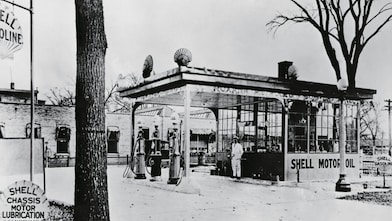
In 1912, Shell began selling gasoline in the United States. Today, that footprint has scaled to approximately 12,000 retail stations serving more than 7 million customers daily.
Images: Shell Historical Heritage & Archive
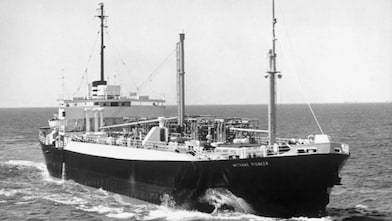
In 1959, the Methane Pioneer carried the first LNG cargo from Louisiana to England, and Shell soon joined the pioneering venture behind it. That early innovation has grown into a leading position today, with Shell being the largest buyer of US-produced LNG for export.
Images: Shell Historical Heritage & Archive
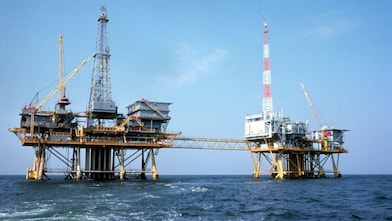
In 1978, Shell started production at the first deep water platform, Cognac, proving what could be achieved at scale. This foundation initiated long-term offshore growth, with assets like the Shell-operated Mars platform surpassing 1 billion barrels of production in 2026, and reinforcing Shell’s position as the largest producing leaseholder in the Gulf of America.
Images: Shell Historical Heritage & Archive
Selda Gunsel, EVP, Shell Projects and Technology“With every new technology wave, we’ve been able to create new opportunities, new possibilities that drive economic growth, which then impacts the American dream in a positive way.”
As the United States evolves, so does the challenge: delivering the energy people depend on today while building the solutions for tomorrow. The path forward will require innovation, resilience, and continued collaboration. Shell works alongside communities, policymakers, engineers, and industry partners to help strengthen energy security, expand access, and support economic growth.
Together, we’re carrying forward the pioneering spirit that has defined America, powering the next chapter of progress.
Moments in time
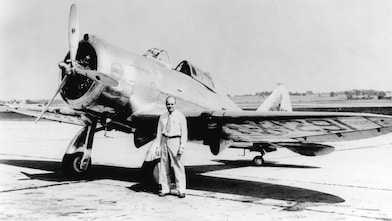
James Doolittle, who led Shell’s aviation department, became a leading advocate for 100‑octane aviation gasoline during World War II, giving fighter pilots a vital speed and climb advantage for the Allies.
Images: Shell Historical Heritage & Archive
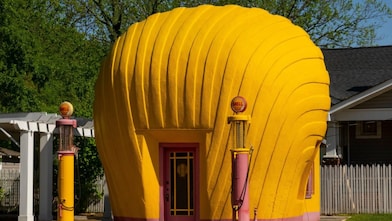
Seven clamshell-shaped gas stations were built in the shape of a classic shell in the 1930s. The last remaining Shell clamshell station is still standing in Winston-Salem, protected in perpetuity by Preservation North Carolina as a historic site.
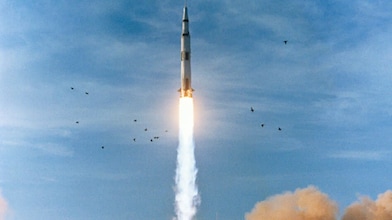
In 1968, Shell Aviation played a role in the Apollo 8 mission, developing the 405 catalyst that helped the spacecraft maneuver more precisely in space, enabling the mission that orbited the Moon and captured the Earthrise image.
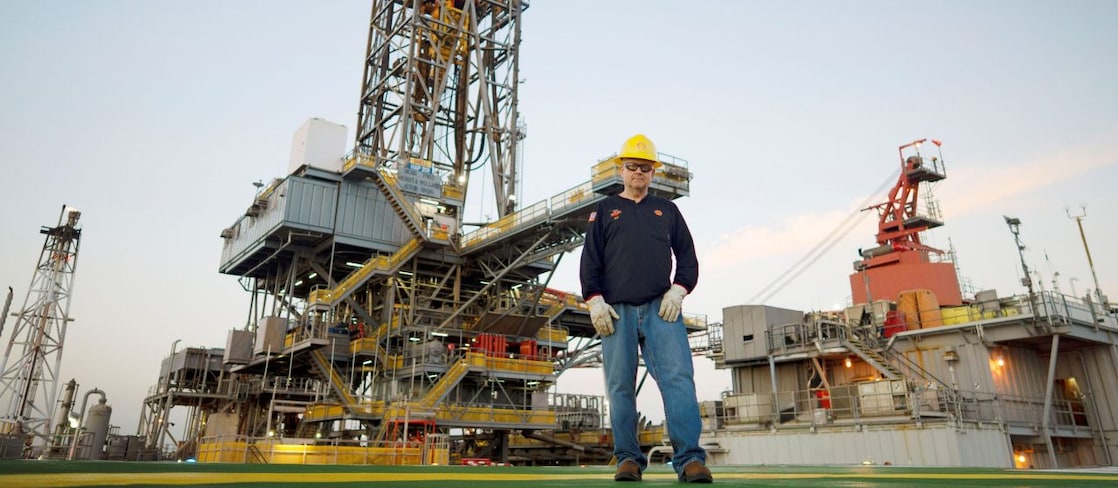
Shell’s mission to Mars reaches epic milestone
Built by people and powered by resilience and ingenuity, the Mars platform marks its one‑billion‑barrel milestone.
Frequently asked questions
Why is Shell focusing on this now?
Why is Shell focusing on this now?
As the USA celebrates its 250th anniversary, this is an opportunity to connect with the millions of customers we serve every day to honor American ingenuity and progress and showcase the role energy plays in daily life. We’re proud of where we’ve been, what we’re doing today, and how we’re working to help meet future energy needs.
What role does Shell play today, and what does the future of energy look like?
What role does Shell play today, and what does the future of energy look like?
Shell delivers energy solutions to millions of customers across the United States to help support transportation, businesses, and communities every day. Looking ahead, the energy system will continue to evolve, requiring innovation, investment, and collaboration to deliver reliable energy while reducing emissions and expanding customer choice.
Why does collaboration matter in advancing America’s energy future?
Why does collaboration matter in advancing America’s energy future?
Energy plays an essential role in everyday life, from transportation to powering businesses and communities, and helps enable American progress. Delivering secure and reliable energy today and shaping the energy system for tomorrow requires collaborations and partnership across communities, policymakers, industry and innovators.