Shell’s mission to Mars reaches epic milestone
Built by people and powered by resilience and ingenuity, the Mars platform marks its one‑billion‑barrel milestone.
Building an energy legacy that powers the future
Read the transcript
Read the transcript
Mars: Building an energy legacy that powers the future
Duration: 6:36 minutes
Description: We're taken aboard the Mars Platform via helicopter where Bill, the Operations Supervisor, takes us for a tour, telling us about his start on the Mars Platform. He also shares the history of the Mars Platform and shows day-to-day operations, including damage caused by Hurricane Katrina in 2005. He is joined by Shania, a Wells Engineer, who speaks to learning from nearly 30 years of operational knowledge and the manpower behind everyday energy.
[Background music plays]
Derek, Mars OIM:
Good morning, Mars.
Mars Crew:
Good morning.
Derek, Mars OIM:
So, I was just informed by the control room that we, as a team, have just produced our one billionth barrel. Congratulations everybody. Y'all did it.
[Text displays]
Mars platform, Gulf of America, 06:30 am
[Text displays]
Since 1996, the Shell-operated Mars platform has provided a secure supply of energy for the US and the world.
Bill, Operations Supervisor:
I took my first flight out here in 1998. So, 28 years ago, a much younger version of myself. Mars is a pioneering platform. It was truly a groundbreaking piece of engineering. It changed what was possible in deep water.
It's been a long journey, one billion barrels of production. It's an incredible milestone.
[Text displays]
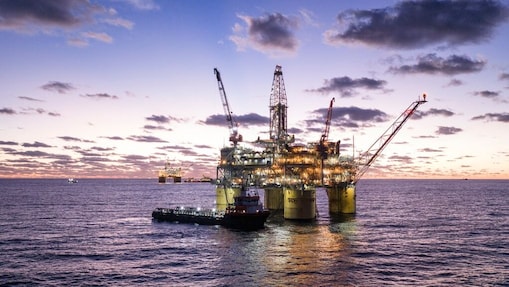
Mars is a US resource located more than 130 miles south of New Orleans and sits in 3,000 feet of water.
Bill:
When Mars first started out here, as far as you could see, there was nothing around us. It opened the door to even deeper exploration. Mars turned what was once an unthinkable frontier into a new realm of possibility.
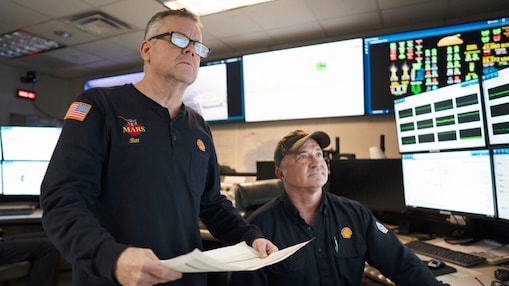
So this is our control room. This is basically the operation center of the platform.
In 1989, when the reservoir below us was first discovered, it turned out to be one of the largest US oil finds in decades.
The technical boundaries we pushed helped pave the way for the entire deep water industry.
Bill:
Now we have Olympus, Vito, and Ursa. We've created an entire community of production platforms. To know that Mars helped grow that is an incredible sense of pride.
[Text displays]
Shell is the largest producing leaseholder in the Gulf, with ten platforms that never sleep.
Bill:
Mars operates 24/7, 365 days a year. On average, around 150 crew members are based out here. The people make the place. We all work together as one big team.
We call ourselves Martians. Once a Martian, always a Martian. We protect and support one another.
[Background music changes]
[Text displays]
In 2005, Hurricane Katrina swept through the Gulf. Mars was evacuated before 175 mph winds and 80-foot waves hit the platform.
Bill:
We weren't sure Mars was going to be recoverable. It took over a million man hours to rebuild. We did not give up.
Three decades of excellence is carried forward by the next generation.
Bill:
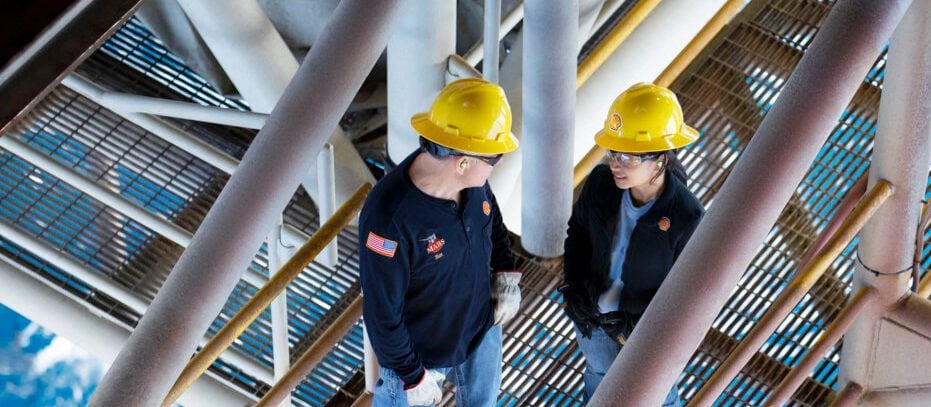
Mentoring young professionals is one of my favorite parts of the job. Passing on knowledge matters because they are the future.
Shania, Wells Engineer:
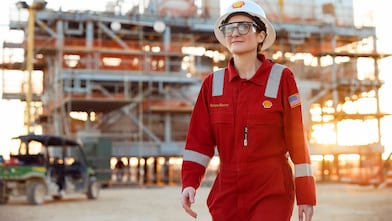
I feel a sense of responsibility to carry the learnings from this asset. Everyone is willing to share what they know. Nearly 30 years of operational excellence and safety is a big legacy to carry forward.
We are always looking for safer and more efficient ways to produce energy. That's how we keep improving future platforms.
[Text displays]
Originally it was thought Mars could recover around 500 million barrels of oil. Discoveries, innovation, and ingenuity have now brought production to one billion barrels.
Bill:
We've produced a billion barrels, and we're not done yet.
[Shell brand mnemonic plays]
© Shell International Limited 2026
[Animated sequence]
The small classic red and yellow Pecten transitions in to display at frame-center against the white background.
At sunrise, more than 130 miles south of New Orleans, the control room hums, crews gather, and the Gulf of America stretches wide in every direction. A familiar rhythm, steady for almost three decades, marked a historic moment. Mars reached a billion barrels of production, becoming the first offshore platform to do so in the Gulf of America.
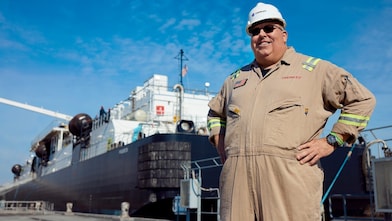
For Bill Lott, an operations supervisor who first flew offshore to Mars in the late 1990s, the milestone is deeply personal:
"It’s been a long journey, one billion barrels of production. It’s an incredible milestone."
From an ambitious start to one billion barrels
Since coming online in 1996, the Shell‑operated Mars platform has played a defining role in deep water energy production. Designed for waters nearly 3,000 feet deep, Mars was a bold step forward at the time and helped redefine what was possible offshore.
Nearly 30 years later, continued investment, enduring engineering, and the commitment of generations of people have helped bring Mars to this landmark achievement.
Pushing the boundaries of deep water
The lessons learned and innovations developed at Mars helped shape operations across the Gulf, and across the industry. Through new discoveries, technological advances, and persistent ingenuity, Mars has produced roughly twice what was originally expected and continues to evolve.
— Bill Lott, Operations Supervisor, Mars platformIt changed what was possible in deep water. The technical boundaries we pushed helped pave the way for the industry that followed.
When Mars was first installed, it stood largely alone in the Gulf. Today, it anchors a growing offshore community of production platforms that include Ursa, Olympus, and Vito, forming a connected system helped shape by shared experiences and technical progress.
The people behind the milestone
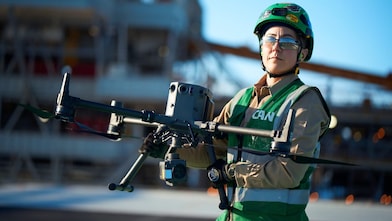
Mars operates around the clock. On any given day, about 150 people live and work offshore on the platform. They run the control room, maintain equipment, prepare meals, and keep the platform operating safely. At night, the platform lights glow on the horizon, a quiet reminder of the effort behind everyday energy.
A continuing legacy
To be the first platform in the Gulf to reach one billion barrels is a momentous milestone, but for those who have been part of Mars, it has never been just about the number. The Mars community identifies as Martians, united by the enduring principle, “once a Martian, always a Martian.” This milestone carries the weight of long days offshore, shared challenges, and moments of problem‑solving that happen when people rely on one another. It reflects years of dedication and quiet perseverance, and the deep sense of pride that comes from being part of something that continues to move forward.
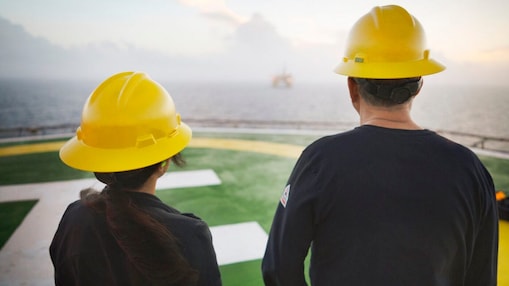
— Bill Lott, Operations Supervisor, Mars platformIt’s a great sense of pride to be part of energy’s past and its future. We’ve produced a billion barrels, and we’re not done yet.
Frequently asked questions
Why is this milestone important beyond just one platform?
Why is this milestone important beyond just one platform?
The work done at the Mars platform helped push technical boundaries in deep‑water production. Many of the lessons learned and technologies developed there have informed operations across the Gulf of America, contributing to ongoing progress in offshore energy.
Why does large scale oil and gas production still matter?
Why does large scale oil and gas production still matter?
Reliable energy production supports the broader economy in practical ways. Domestic oil and gas help stabilize supply, support jobs across multiple industries, and reduce reliance on imports. Assets like the Mars platform contribute to that reliability by producing energy from existing infrastructure, while the platform’s teams continue to focus on efficiency, safety, and responsible operations. It’s about meeting today’s needs while continuing to adapt for the future.
What’s next for deep water energy production?
What’s next for deep water energy production?
The next chapter in deep water is about working smarter with what already exists, while continuing to advance technology in platforms of the future. That means helping to extend the life of platforms through innovation, tying back new discoveries, improving efficiency, and sharing lessons learned across assets. Deep water will keep evolving as teams apply decades of experience when it comes to designing and operating platforms as we continue to look for ways to find safer, more reliable, and more efficient ways to produce energy. Progress in deep water isn’t about one moment or one platform. It’s about continuous improvement and building on what works.