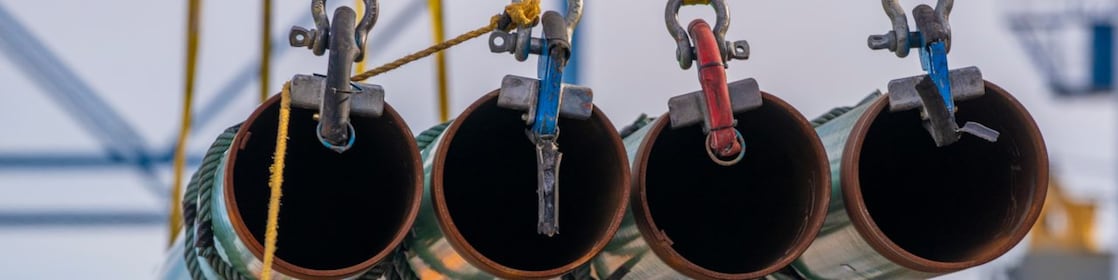
Falcon Ethane Pipeline System
As the sole supplier of ethane to the Pennsylvania Petrochemicals Complex in Monaca, Pa., the 97-mile pipeline system connects three major ethane source points in Pennsylvania and Ohio with new and reliable infrastructure.
Shell Pipeline Company LP constructed, owns, and operates the Falcon Ethane Pipeline System, a 97-mile common carrier ethane pipeline across Southwestern Pennsylvania, West Virginia and Eastern Ohio that supplies Shell’s Pennsylvania Petrochemicals Complex with regionally-sourced ethane.
The Falcon Pipeline System connects three major ethane source points: Houston, Pa., Scio, Ohio, and Cadiz, Ohio, in the rich gas portions of the Marcellus and Utica shale reservoirs.
Having become mechanically complete in 2020, the Falcon Pipeline went into commission in October 2021.
Facts About Falcon
Project Purpose & Design
- The Falcon Pipeline is a mostly 12‑inch pipeline designed to enhance ethane supply using new, reliable infrastructure, with safety as the top priority.
Route Selection & Community Engagement
- The pipeline route was selected to limit impacts to the community, in consultation with landowners and other community members, and parallels existing rights of way where possible.
- Shell worked with private, public, and corporate landowners to acquire right‑of‑way easements, with routing discussed and agreed upon while considering property‑specific concerns.
- Shell Pipeline has a proven track record of operating safely and responsibly and remains committed to ongoing engagement with local communities.
Environmental & Cultural Studies
- Numerous studies were conducted early in the project to support route selection and permit submissions, including wetland and stream delineations, traffic and noise studies, geotechnical testing, impact area mapping, cultural investigations, and assessments of potential impacts to rare, threatened, and endangered species.
- Horizontal directional drilling (HDD) was used at sensitive crossings to limit surface disturbance and protect environmentally sensitive areas.
Pipeline Construction & Engineering Standards
- All pipe is buried at a minimum depth of four feet and is rated for nearly twice the expected operating pressure, and three times the required pressure in HDD sections.
- Pipe is pressure‑tested during manufacturing and again in the field, and every weld is inspected using X‑ray or automatic ultrasonic testing.
Operations, Monitoring & Integrity Management
- Pipeline integrity is maintained through cathodic protection, 24/7 electronic monitoring, and routine right‑of‑way inspections.
- Valves are strategically located to optimize emergency response and can be operated remotely from a 24/7, state‑of‑the‑art control center.
- Regular ground and aerial surveys continue along the pipeline route during operation.
Emergency Preparedness
- Ongoing emergency response planning and training is conducted in coordination with local and county first responders and emergency managers.
Right‑of‑Way Restoration & Conservation
- Right‑of‑way restoration and now vegetation management focused on promoting vegetative growth and stabilizing slopes following construction.
- As part of Shell Pipeline’s right‑of‑way conservation efforts, portions of the Falcon Pipeline corridor support research‑based vegetation management practices designed to promote native plants, pollinators, and wildlife habitat, in collaboration with partners such as Penn State University and conservation organizations. Pipeline Conservation | Business